Skool vs Facebook Groups (Which Is Better for Monetisation?)
Discover the key differences, pros, cons, and the best platform to build recurring income online.
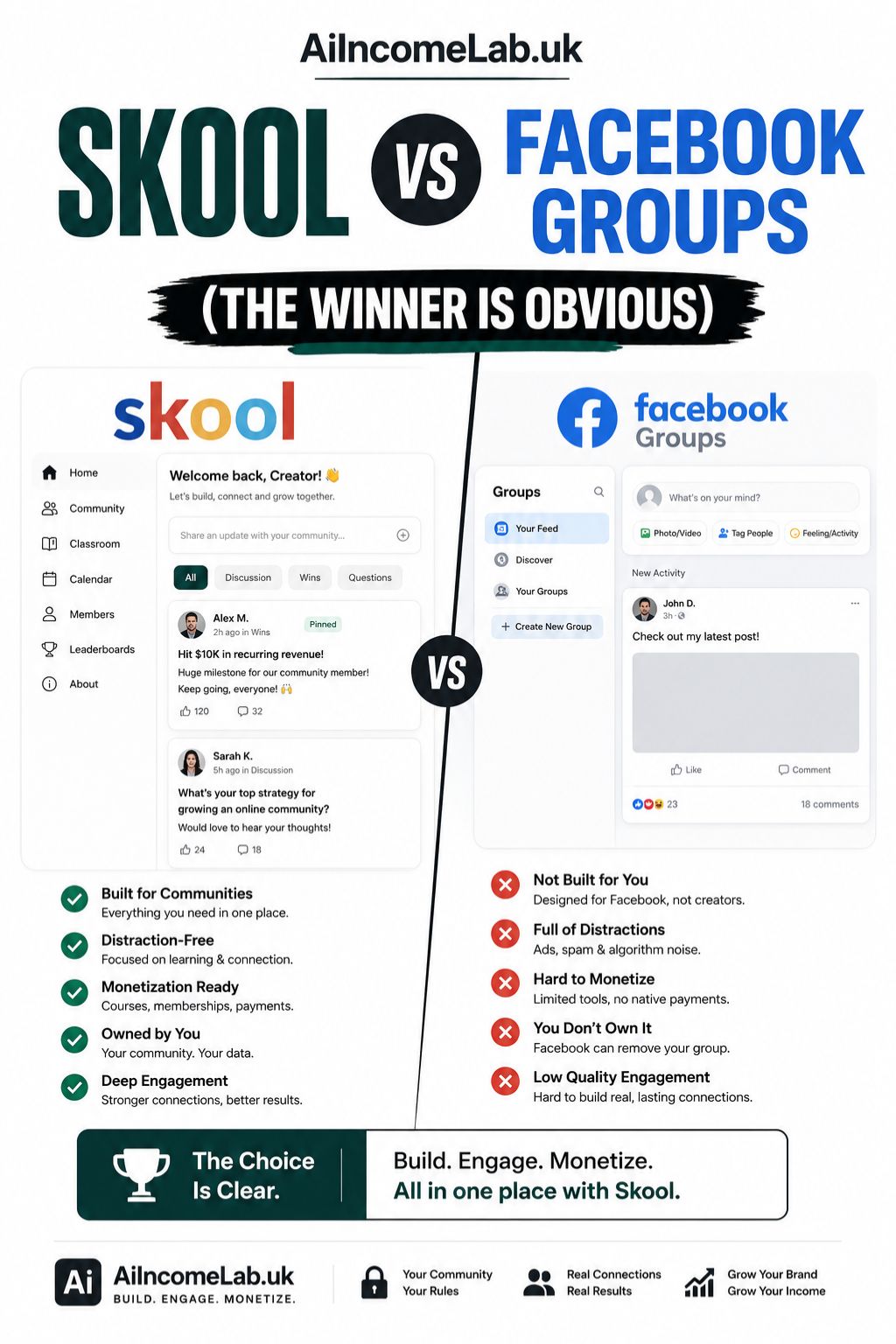
- 01.The Core Differences
- 02.6 Key Differences For Creators
- 03.Why Skool Wins For Monetisation
- 04.Realistic Earning Potential
- 05.Pros and Cons Breakdown
- 06.How to Monetize Each Platform
You’ve probably tried using Facebook Groups to build something… but turning engagement into actual income feels nearly impossible.
Posts get buried. Members get distracted. And you don’t really "own" anything.
That’s why more creators are moving toward platforms like Skool — not for features, but for monetisation simplicity.
Quick Answer: If you want a free way to build an audience, Facebook Groups work. But if your goal is to make consistent, recurring income, Skool is the better choice. It’s designed for paid communities, while Facebook Groups are not built for monetisation.
The Core Differences
What is Skool? Skool is an all-in-one online community platform designed specifically for creators who want to:
- Build paid communities
- Host courses
- Manage members
- Generate recurring revenue
It combines community, content, and monetisation into one simple system.
What are Facebook Groups? Facebook Groups are free community spaces inside Facebook where people can:
- Share content
- Engage in discussions
- Build audiences
They’re great for reach—but not designed for structured learning or monetisation.
6 Key Differences For Creators
1. Monetisation Capabilities
- Facebook Groups: No built-in payment system. Requires external tools and relies on funnels and redirects.
- Skool: Built for paid memberships. Easy subscription setup and direct monetisation from day one.
2. Ownership & Control
- Facebook Groups: You don’t own your audience. Platform rules can change anytime, risking bans or reduced reach.
- Skool: Full control over your community with no algorithm interference. A stable environment for growth.
3. User Experience
- Facebook Groups: Cluttered interface where notifications get lost among competing distractions.
- Skool: Clean, focused environment designed for learning and engagement without distractions from ads or feeds.
4. Engagement & Retention
- Facebook Groups: Engagement drops quickly as members forget to return. No structured progression.
- Skool: Gamification (levels, rewards) and clear progress systems lead to higher long-term retention.
5. Content Delivery
- Facebook Groups: Disorganized posts make it hard to structure learning. No course system.
- Skool: Built-in course hosting with organized modules and easy-to-follow learning paths.
6. Distractions & Algorithm Limitations
- Facebook Groups: Competing with the news feed. The algorithm controls visibility.
- Skool: No algorithm. Members see everything in a focused experience.
Why Skool Wins For Monetisation
This is where the difference becomes obvious.
Why Facebook Groups Struggle to Generate Revenue Facebook Groups weren’t built for monetisation. To make money, you usually need:
- External checkout tools
- Email funnels
- Landing pages
- Constant promotion
This creates friction. And friction kills conversions.
Why Skool Is Built for Paid Communities Skool removes that friction completely. You can charge monthly subscriptions, deliver content in one place, and engage members consistently. It simplifies everything into one system.
And remember: The tool doesn’t make money — the system does. Skool just makes the system easier to execute.
Realistic Earning Potential
Facebook Groups:
- Income depends on external funnels
- Inconsistent revenue
- High churn
Skool:
- Recurring monthly income
- Predictable growth
- Better retention
Example:
- 100 members × £20/month = £2,000/month
- 300 members × £30/month = £9,000/month
That’s the power of a membership site business model.
Pros and Cons Breakdown
Skool
Pros
- Built for monetisation
- All-in-one platform
- High retention features
- Clean user experience
- Easy to scale
Cons
- Monthly cost
- Less organic discovery than Facebook
Facebook Groups
Pros
- Free to use
- Massive built-in audience
- Easy to start
Cons
- Poor monetisation tools
- Algorithm limitations
- Low control
- High distraction environment
How to Monetize Each Platform
How to Monetize Facebook Groups The typical process:
- Build a free group
- Grow engagement
- Send members to offers
- Use external tools for payments
Common tools include ThriveCart for payments and MailerLite for follow-ups. The problem? Too many steps. Too much friction.
How to Monetize Skool With Skool, it’s much simpler:
- Create your community
- Set a monthly price
- Add content or coaching
- Invite members
That’s it. No complicated funnels required.
Common Mistakes to Avoid
1. Relying Only on Free Platforms Free platforms limit your income potential. You need ownership to scale.
2. Not Owning Your Audience If your entire business is on Facebook, you’re exposed to risk. Always prioritize control.
3. Overcomplicating Tech You don’t need funnels, complex automations, or multiple tools. Simplicity wins.
4. Ignoring Retention Retention is the real driver of revenue. Focus on engagement, results, and consistency.
Final Verdict
Let’s keep it simple.
- Facebook Groups = Audience building
- Skool = Income generation
If your goal is building a free community, Facebook works. If your goal is building a business, Skool wins. Because at the end of the day: Facebook is built for attention. Skool is built for transformation and revenue.
Start Building Your Paid Community Today
If you’re serious about creating recurring income online, you need a system that supports monetisation—not fights against it.
Skool gives you that system. No distractions. No complexity. Just a clear path to revenue.
Ready to stop guessing and start executing?
Get the exact Tier-1 infrastructure blueprint used to build scalable audience and revenue systems.

Alex Chen
AI researcher and digital marketer with 10 years of experience.
Discussion (0)
Ready to build your AI income system properly?
Stop guessing. Follow the exact step-by-step infrastructure blueprint used by successful creators to build systems that work while they sleep.